Table of Contents
If you’re searching for a contemporary wardrobe, you’re probably not just looking for another piece of furniture. You’re looking for a solution—something that fits the way you live today, not the way homes were used twenty years ago.
Modern living has changed dramatically. Homes are more compact, routines are faster, and storage is no longer just about hiding clutter. A contemporary wardrobe has to work harder. It needs to organize your daily life, support your habits, adapt to changing seasons, and still look clean and intentional.
This guide is written to help you think beyond surface-level design. You’ll learn how modern wardrobes actually function in real homes, how to plan one around your lifestyle, and how to avoid common mistakes that lead to wasted space and frustration. By the end, you should be able to make informed, practical decisions—whether you’re planning a custom wardrobe, redesigning a bedroom, or developing furniture solutions for modern spaces.
Why Contemporary Wardrobes Matter More Than Ever
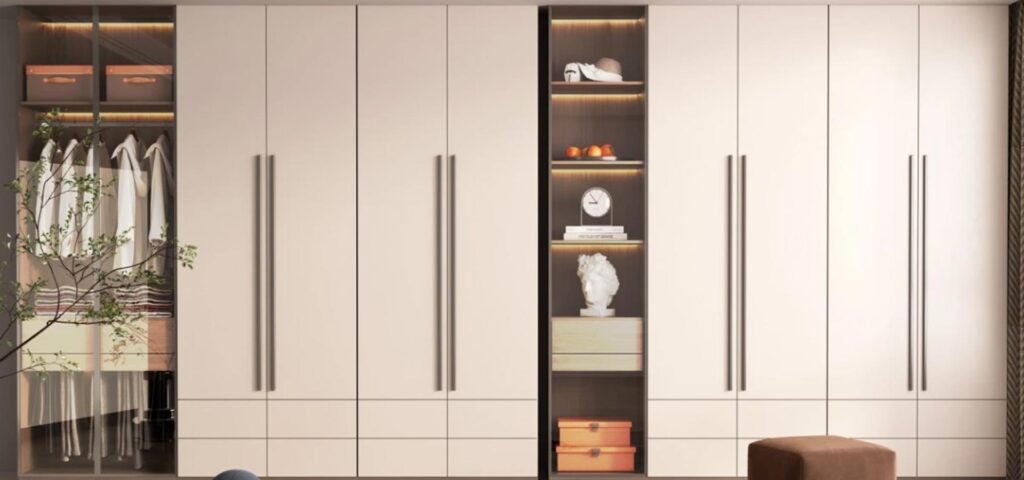
A contemporary wardrobe is not defined by a single style. It is defined by how it responds to modern life.
According to data published by the Joint Center for Housing Studies of Harvard University, the average size of newly built homes has plateaued while household storage needs continue to grow, storage and organization are among the top three priorities in home renovation projects.
You’re likely experiencing this yourself:
- More clothing categories than before (workwear, casual, active, seasonal)
- More accessories (bags, shoes, tech items)
- Less tolerance for visual clutter
- A desire for flexible, future-proof solutions
A contemporary wardrobe addresses these realities by focusing on layout efficiency, modularity, and long-term usability rather than decorative excess.
For broader context on how modern storage design is evolving, you can explore an overview of space-efficient interiors.
What Defines a Contemporary Wardrobe Today?
A contemporary wardrobe is often misunderstood as simply “modern-looking.” In practice, it is defined by function first, design second.
Key characteristics include:
- Clean, uninterrupted surfaces
- Thoughtful internal zoning
- Minimal visual noise
- Flexible storage configurations
- Materials chosen for durability and maintenance, not ornament
Rather than asking “Does this wardrobe look modern?”, a better question is: “Does this wardrobe support how you live today?”
The Lifestyle-Based Approach to Wardrobe Planning
One of the biggest mistakes people make when choosing a contemporary wardrobe is starting with appearance instead of behavior.
Before thinking about finishes or door styles, you need to understand how you actually use your wardrobe.
Ask yourself:
- How often do you access each clothing category?
- Which items are used daily, weekly, or seasonally?
- Do you prefer folding or hanging?
- Do you need space for accessories, luggage, or tech?
A contemporary wardrobe should mirror your habits, not force you to adapt to it.
Example Case: A Dual-Routine Household
Consider a household where one person works mostly from home and the other splits time between office and travel. Their wardrobe needs are fundamentally different.
A functional contemporary wardrobe in this scenario might include:
- Central hanging zones for shared daily wear
- Dedicated vertical storage for travel items
- Drawer sections sized for folded casual clothing
- Adjustable shelves for seasonal rotation
This kind of zoning reduces daily friction and keeps the wardrobe relevant as routines change.
Internal Layout Is More Important Than Exterior Design
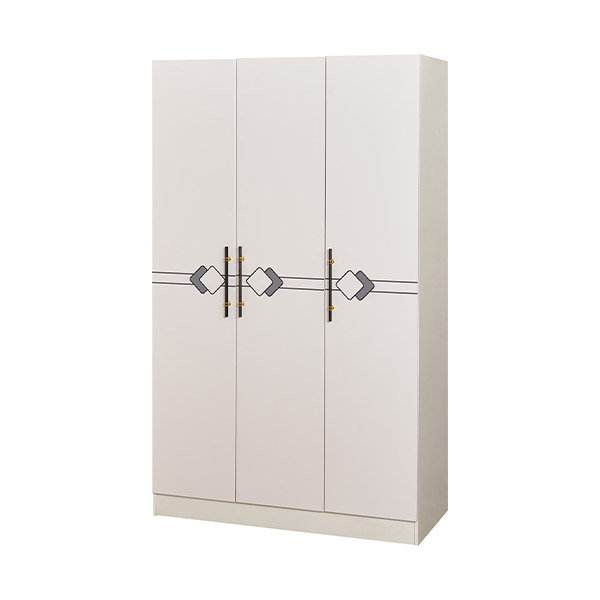
When people shop for wardrobes, they often focus on doors, finishes, and handles. In reality, the internal layout determines whether a wardrobe succeeds or fails.
A contemporary wardrobe prioritizes internal clarity.
Common Internal Zones in Contemporary Wardrobes
| Zone Type | Primary Use | Why It Matters |
|---|---|---|
| Full-height hanging | Coats, dresses | Prevents wrinkling and wasted space |
| Mid-height hanging | Shirts, jackets | Improves daily accessibility |
| Drawer stacks | Folded items, accessories | Keeps small items organized |
| Adjustable shelving | Seasonal or flexible storage | Adapts over time |
| Vertical compartments | Bags, long items | Prevents clutter |
Well-planned internal zones reduce decision fatigue and speed up daily routines.
Material Choices in Contemporary Wardrobes
Contemporary wardrobes favor materials that balance aesthetics, durability, and sustainability.
Rather than heavy ornamentation, materials are selected for:
- Structural stability
- Ease of maintenance
- Consistency across large surfaces
- Long-term performance
Common Material Considerations
- Engineered wood panels for dimensional stability
- MDF for smooth, uniform finishes
- Solid wood elements for load-bearing zones
- Metal hardware for longevity
- Low-emission finishes to support indoor air quality
According to research from the Forest Stewardship Council, engineered wood products can offer more consistent performance than solid wood when used in controlled interior environments. A modern wardrobe uses materials strategically rather than decoratively.
How Contemporary Wardrobes Handle Small Spaces
Small spaces don’t require smaller wardrobes. They require smarter ones.
A contemporary wardrobe designed for limited space often uses:
- Full-height installations to maximize vertical storage
- Sliding or flush doors to reduce clearance requirements
- Integrated internal lighting to improve visibility
- Consistent finishes to visually expand the room
Case Example: Compact Urban Bedroom
In a compact bedroom with limited floor area, a full-height contemporary wardrobe with internal zoning can replace multiple storage pieces. This reduces visual clutter and creates a calmer environment.
Architectural studies from the Royal Institute of British Architects show that vertical storage significantly improves perceived space efficiency in small interiors.
Flexibility and Modularity: Planning for Change
One defining feature of a contemporary wardrobe is adaptability.
Life changes. Storage needs change with it.
A well-designed wardrobe allows you to:
- Reposition shelves
- Convert hanging space into drawers
- Add or remove internal components
- Reconfigure zones without structural changes
This modular thinking is increasingly common in contemporary furniture systems and aligns with sustainable design principles promoted by the Ellen MacArthur Foundation: when your wardrobe adapts instead of being replaced, it delivers long-term value.
Contemporary Wardrobes and Visual Simplicity
Visual simplicity does not mean lack of personality. It means intentional restraint.
A modern wardrobe typically uses:
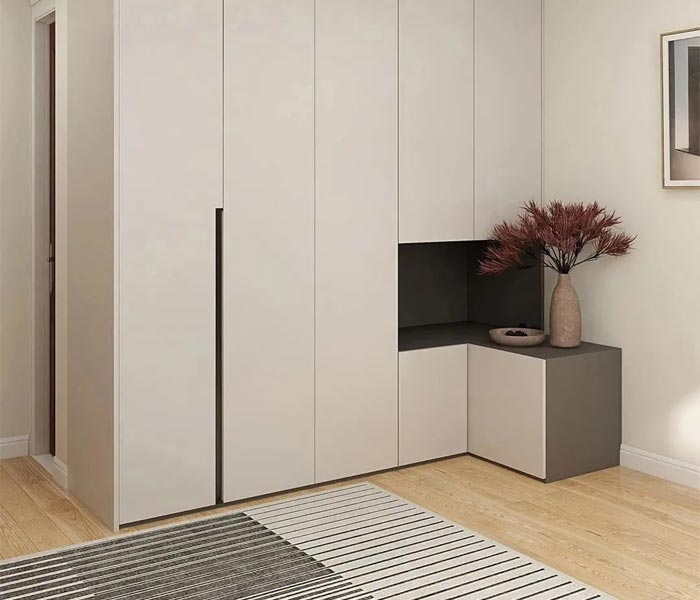
- Neutral or soft-toned finishes
- Flat or subtly textured surfaces
- Minimal hardware or integrated handles
- Consistent proportions
This approach allows the wardrobe to support the room rather than dominate it.
In published interior psychology studies, reduced visual clutter is associated with lower cognitive load and an improved sense of calm in living spaces: Your wardrobe is something you interact with daily. Its visual calm matters.
Planning a Contemporary Wardrobe Step by Step
If you’re approaching wardrobe planning from scratch, here is a practical sequence you can follow.
- Inventory your items by category and frequency
- Identify daily-access zones versus long-term storage
- Allocate hanging versus folded space
- Decide on flexibility needs
- Choose materials based on use intensity
- Select finishes that integrate with the room
This process ensures your modern wardrobe is built around reality, not assumptions.
Common Mistakes to Avoid
Even well-intentioned wardrobe projects fail due to avoidable errors.
Common issues include:
- Prioritizing appearance over layout
- Underestimating hanging space needs
- Ignoring future storage changes
- Overloading shelves without structural support
- Using finishes that show wear too quickly
A contemporary wardrobe should solve problems, not create new ones.
Designing a Wardrobe That Supports Your Life
A contemporary wardrobe is not a trend. It is a response to how people actually live today.
When designed properly, it becomes an organizing system that saves time, reduces stress, and supports daily routines without demanding attention. It adapts as your needs evolve and integrates seamlessly into your space.
If your goal is to create furniture solutions that genuinely improve modern living, starting with how wardrobes function—not just how they look—is the most effective approach.
FAQ
What makes a wardrobe contemporary rather than modern?
A contemporary wardrobe reflects current living patterns and prioritizes function and flexibility, while “modern” often refers to a specific design era.
How do you size a contemporary wardrobe correctly?
Sizing should be based on inventory analysis rather than room size alone. Vertical space is often underutilized.
Are modern wardrobes suitable for families?
Yes. Internal zoning and modular layouts make them highly adaptable to shared use.
Can a contemporary wardrobe be customized later?
If designed modularly, many internal components can be adjusted or replaced over time.
How long should a well-designed modern wardrobe last?
With quality materials and thoughtful planning, a contemporary wardrobe should remain functional for many years without structural changes.